
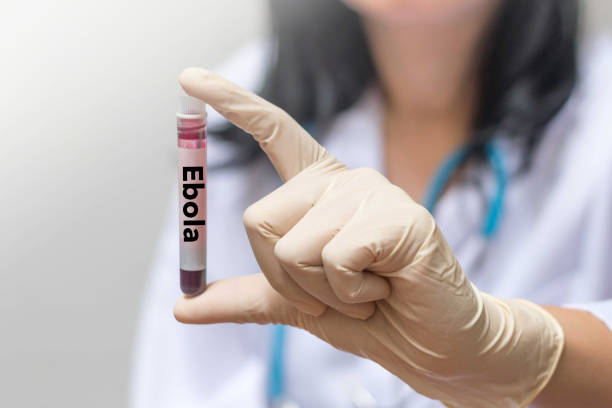
Kenya Court Blocks U.S. Ebola Quarantine Facility — What the Deal Really Means for Kenyans.
A Kenyan High Court has suspended a plan to establish an Ebola quarantine facility for U.S. nationals exposed to the virus, following a backlash from health workers and rights activists. Ask: Was Kenya protecting Americans — or being used as a dumping ground? T
What Is the US-Kenya Ebola Quarantine Deal ?
1.The Agreement — What Was Planned
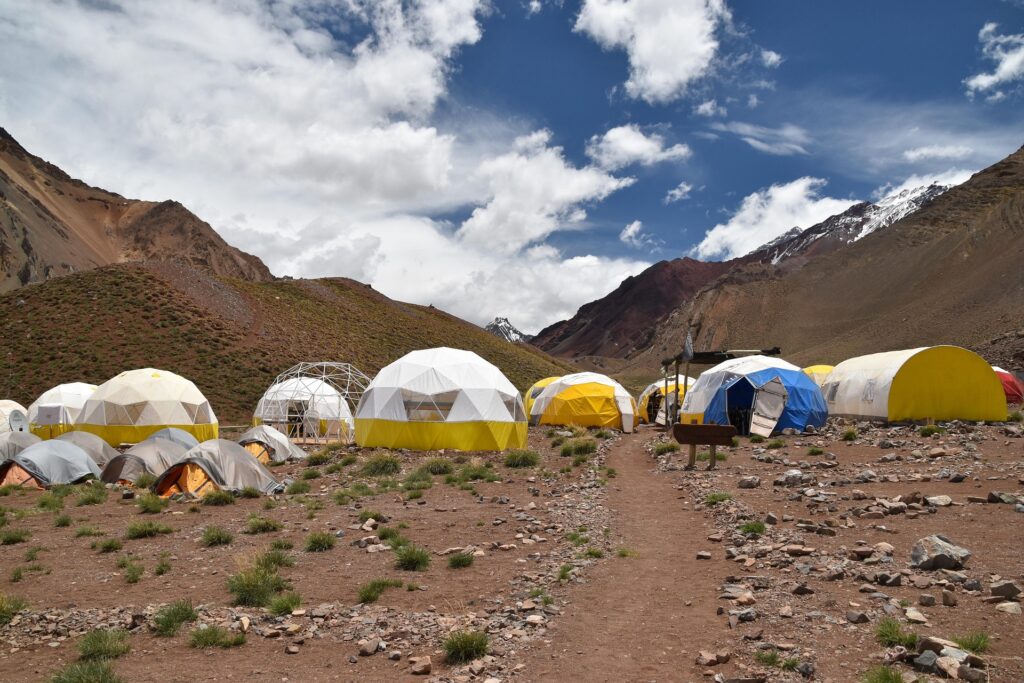
U.S. officials said the 50-bed unit at Laikipia Air Force Base in central Kenya — about 200km from Nairobi — would serve Americans who had been exposed to Ebola but were still asymptomatic. Patients who developed symptoms would then be moved to facilities in Europe. U.S. Secretary of State Marco Rubio said the U.S. was committing $13.5 million toward Kenya’s Ebola preparedness efforts following a phone call with President William Ruto. The U.S. is giving more than $80 million in aid to combat the Ebola outbreak, bringing the total investment in prevention to more than $112 million
The Money on the Table?
U.S. Secretary of State Marco Rubio said the U.S. was committing $13.5 million toward Kenya’s Ebola preparedness efforts following a phone call with President William Ruto. The U.S. is giving more than $80 million in aid to combat the Ebola outbreak, bringing the total investment in prevention to more than $112 million. The HillBecker’s Hospital Review
How Long Has This Agreement Been in the Making?
A 2015 biosecurity agreement, signed by former Health Cabinet Secretary James Macharia and former U.S. Ambassador Robert Godec and ratified by the National Assembly in November 2016, opened the door. It was extended for seven years in April 2022, meaning it lapses in April 2029. The current Ebola facility is a product of that long-standing framework.
Why Is Kenya at the Centre of This?
Since the outbreak was confirmed in mid-May, there have been more than 1,000 suspected and confirmed cases, including 246 deaths according to the WHO, and experts warn the real numbers are likely much higher due to late detection and difficulties tracing contacts in eastern DRC, where there is widespread armed conflict. Explain Kenya’s strategic geography as a regional hub
Why Kenyans Are Furious — The 5 Core Objections
1. Secrecy and No Public Participation
The Katiba Institute described the quarantine facility as being established “in secrecy and unilaterally,” raising what it called “grave constitutional concerns regarding the rights to life, health, fair administrative action, public participation, and parliamentary oversight.
2. Kenya Has Zero Ebola Cases — Why Import Risk?
The main doctors’ union in Kenya and the Law Society of Kenya told CNN they oppose the plan, saying it risks importing Ebola into the East African nation, which has no cases as of the time of writing
3. Is Kenya Being Treated as a Containment Colony?
The Kenya Medical Practitioners, Pharmacists and Dentists Union — representing more than 10,000 doctors — described the arrangement as Kenya being treated as a “containment colony for a disease it had nothing to do with generating
4.Even American CDC Officials Opposed It
CDC officials strongly recommended against the plan, with the agency’s acting director Dr. Jay Bhattacharya reportedly also advising against it. Some officers at the agency were described as “furious about it,” believing the plan would make recruiting and staffing for Ebola response activities harder
5. Constitutional Red Flags
The Katiba Institute argued that “constitutional recklessness” had implications for “grave public health,” and that Kenya appeared to have been selected as an alternative containment site, thereby externalising infectious disease risk management to Kenyan territory
What the Court Decided
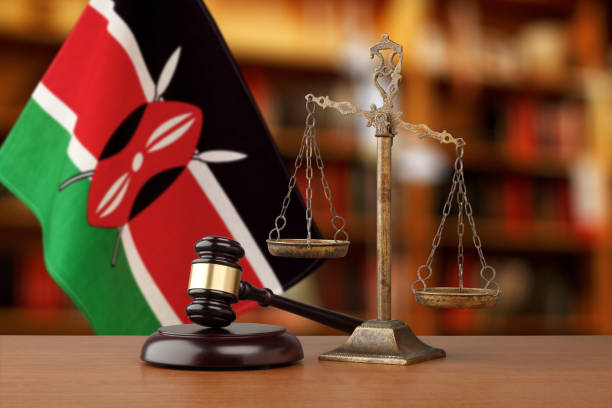
High Court Judge Patricia Nyaundi barred Kenya from establishing or operating any Ebola-related facility under agreements with the U.S. or other foreign governments, and from admitting anyone exposed to or infected with the virus into the country until the legal challenge is resolved. The case returns to court on June 2, 2026. CNN
The petition names the Attorney-General and Health Cabinet Secretary as respondents and seeks to block what it describes as efforts to convert Kenya into “an offshore quarantine centre for foreign states.” Daily Nation
What the Government and the U.S. Say in Defence (“William Ruto Ebola deal”)
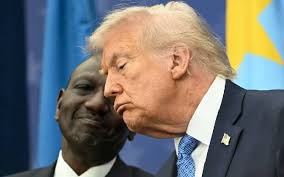
Present the other side fairly. The Trump administration described the facility as “state-of-the-art.” Cover the $13.5M commitment. Note Kenya’s own December 2024 foreign policy document that listed Kenya as a “wellness, humanitarian and health emergencies medical hub.” This is the government’s own strategic rationale.
What Happens on June 2? — What to Watch
Bullet list of unresolved questions you should track
- Will the court make the suspension permanent?
- Will the doctors’ union follow through on their strike?
- Will the U.S. relocate the facility to another country?
- What does this mean for the broader Kenya-U.S. health cooperation framework?
- Will Parliament demand a review of the 2015 biosecurity agreement?
What Should Kenya Do? — Our Take
Let’s be honest: Kenya cannot afford to say no to the United States with its arms crossed and nothing else to offer. The relationship matters. The $13.5 million in Ebola preparedness funding matters. The broader Kenya-U.S. health cooperation framework, built over a decade, matters.
But here is what also matters — how a deal is done is just as important as what the deal contains.
Kenya has a constitution. It has a parliament. It has 55 million citizens who deserve to know when their government is negotiating agreements that place a foreign military-managed Ebola isolation facility on their soil. The Katiba Institute did not go to court because Kenyans are anti-American. They went to court because the process was broken.
So here is what Kenya should do — and should demand:
1. Renegotiate, Don’t Reject Slamming the door entirely serves no one. Kenya should use this court pause as leverage to renegotiate the terms of the facility openly — with clear written agreements on who manages it, who can be admitted, what biosafety standards apply, and what Kenya receives in return beyond a promise of funding.
2. Parliament Must Be Involved — No Exceptions The 2015 biosecurity agreement was ratified by the National Assembly. Any new agreement that flows from it — especially one involving a foreign-run medical facility on Kenyan military grounds — should go back to Parliament for scrutiny. No executive shortcuts. Kenya’s constitution is not a bureaucratic inconvenience; it is the operating manual for a functioning democracy.
3. Demand Reciprocity, Not Charity If Kenya is being asked to bear risk — even managed, monitored risk — then Kenya should negotiate real benefit-sharing. Not just Ebola preparedness funding, but technology transfer, training for Kenyan health workers, and a guarantee that the facility serves all nationalities, not just U.S. citizens. Kenya pushed for this. They should hold firm on it.
4. Kenya Must Lead Its Own Health Narrative Kenya has positioned itself in its own 2024 foreign policy as a “wellness, humanitarian and health emergencies medical hub.” That is an ambitious, admirable vision. But a hub is not a dumping ground. A hub is a place of expertise, leadership, and mutual benefit. If Kenya wants to be taken seriously as a regional health leader, it must show it can negotiate health agreements as an equal partner — not as a country that signs deals quietly and hopes no one notices.
5. Civil Society Deserves a Seat at the Table The Katiba Institute, the Kenya Medical Practitioners Union, and the Law Society of Kenya were not wrong to raise their voices. A government that listens to its civil society before signing — not after — is a government that avoids exactly this kind of embarrassing public standoff. The lesson for Nairobi is clear: public participation is not optional, and it is not a threat. It is how you build deals that actually hold.
The bottom line? Kenya should say yes to health cooperation and no to secrecy. Yes to Ebola preparedness funding and no to being treated as a geopolitical convenience. Yes to the United States as a partner — and yes, absolutely yes, to the Kenyan constitution as the non-negotiable foundation of any deal that gets signed in this country’s name.
Conclusion: Limbo at Laikipia — And a Question Kenya Must Answer
As of today, May 30, 2026, the 50-bed isolation unit at Laikipia Air Base sits empty and suspended. U.S. Public Health Service personnel were reportedly already in training at Joint Base Andrews in Maryland, preparing for a deployment that may now never happen — at least not on the original timeline. The court returns to hear the full case on June 2. Until then, Kenya is caught between a powerful ally with a cheque in one hand and a constitutional obligation to its own people in the other.
This story is not really about Ebola. Ebola is the trigger, not the issue. The real issue is whether Kenya’s sovereignty — its right to determine what happens on its own soil — is negotiable when a superpower comes offering dollars and a deadline. History across the African continent suggests that when that question is not answered loudly and clearly, it tends to get answered for you.
The Kenyan court did something important on Friday. It said: slow down. It said: let the people speak. It said: the constitution applies even when the Americans are watching.
What happens on June 2 will tell us whether that pause becomes a precedent — or just a speed bump.
Kenya deserves health partnerships. Kenya deserves Ebola funding. Kenya also deserves to be asked, not told.
Should Kenya renegotiate this deal openly — or walk away entirely? Drop your thoughts in the comments below. And if this story matters to you, share it. This conversation needs more Kenyan voices in it.
Tags: Kenya, Ebola 2026, US Kenya relations, Laikipia Air Base, public health Kenya, Katiba Institute, William Ruto, Marco Rubio, biosecurity Kenya, DRC Ebola outbreak, Kenya court ruling, Kenya sovereignt
- Full court ruling coverage — Al Jazeera
- Katiba Institute petition details — CBS News
- CDC opposition to the deal — CNN
- Doctors union strike notice — Techweez
- Nation Africa — inside the 2015 agreement
- The Hill — $13.5M U.S. funding commitment
- NBC News — court suspension order
- WHO Ebola outbreak data
Found this useful? Subscribe to our newsletter for daily Kenya news breakdowns — no noise, just what matters. Share this post with someone who needs to know what is really happening at Laikipia. And follow us on Instagram, X, and TikTok for live updates as the June 2 court hearing approaches.